How a Restaurant Pager Knows Your Order Is Ready
Some cafes, food courts, and counter-service restaurants hand you a numbered device after you order. It stays quiet while you wait, then flashes, vibrates, or beeps when the food is ready.
The pager usually does not need mobile data or an internet connection for this basic job. It listens for a local radio transmitter near the counter.
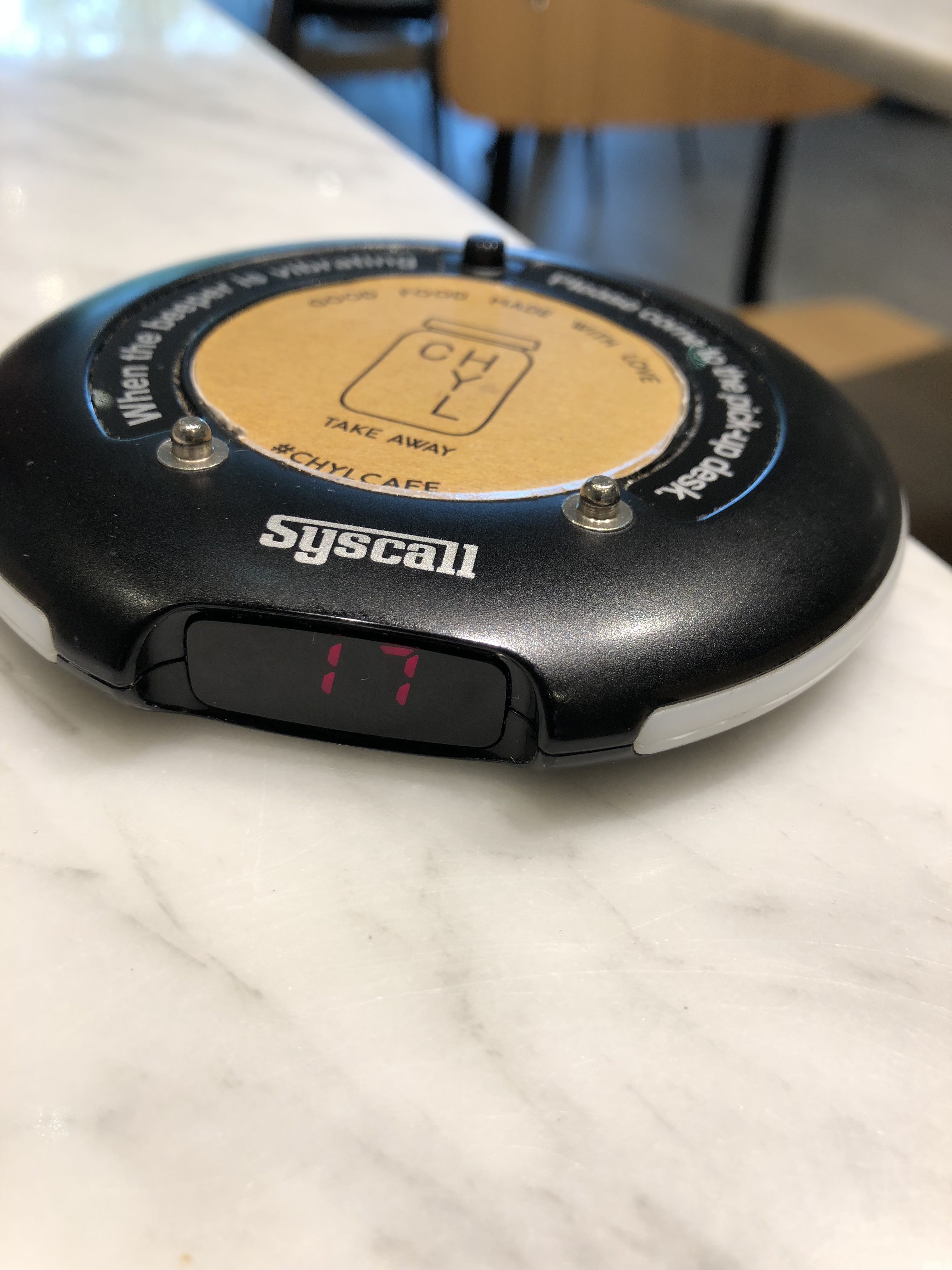
Each Pager Has an Identifier
A basic system contains a keypad transmitter and a set of rechargeable receivers. Every pager has an identifier paired with that system.
The staff member gives the device to a customer and associates its number with the order. When the meal is ready, someone enters that number on the transmitter and presses the call button.
The transmitter sends a short radio message. Several pagers within range may receive it, but only the receiver with the matching identifier activates its alert.
What Happens Inside the Pager
The receiver decodes the message and activates one or more components:
- LEDs that flash;
- a small vibration motor;
- a buzzer;
- in some systems, a display or different alert patterns.
The customer returns the device when collecting the order. The pager then goes back onto its charging base, often using contacts on the bottom of the case.
The Retekess T119 manual describes the same flow: staff issue a numbered receiver, enter that number on the transmitter, and the selected unit vibrates, flashes, or sounds.
The Radio Details Vary
The frequency, protocol, transmit power, and useful range depend on the manufacturer and region. Walls, metal, battery condition, and interference can reduce the practical distance.
Systems therefore include a pairing process and often a system identifier. This reduces the chance that a nearby transmitter calls the wrong group of pagers.
Some current products add point-of-sale integration or queue software. The basic exchange remains small: the order keeps the pager number, the transmitter calls that number, and the receiver alerts the customer.
This works well because it moves the waiting line away from the counter without asking the customer to install an app or provide a phone number.
Pierre-Henry Soria